
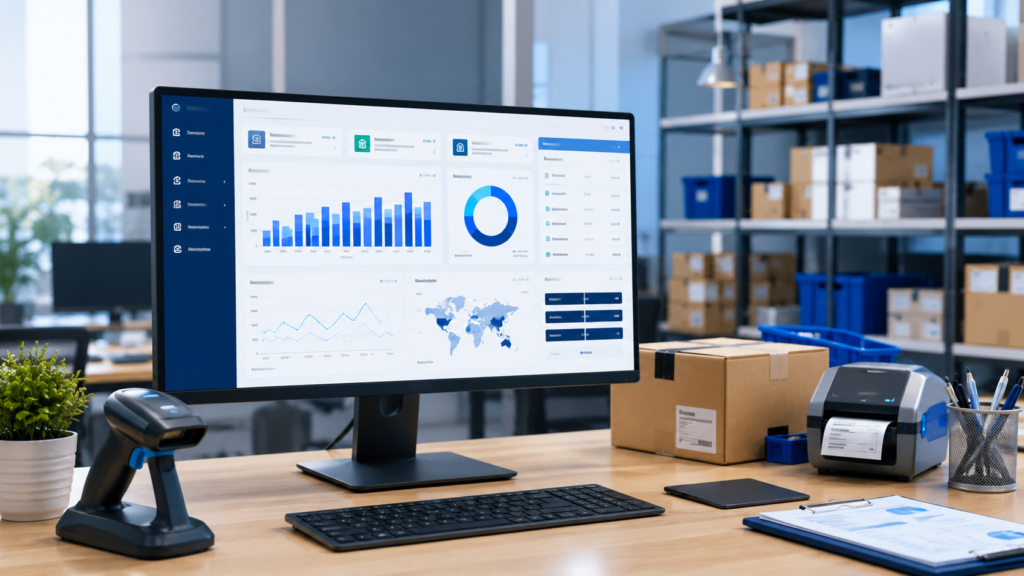
Introduction
AI inventory management helps small businesses control stock levels, forecast product demand, automate reordering, and reduce unnecessary inventory costs. By analyzing sales history and purchasing patterns, artificial intelligence can help business owners make better decisions about what to order, when to order it, and how much stock to keep.
Inventory management is a constant challenge for small businesses. Ordering too much stock ties up cash that could be used for marketing, payroll, or business growth. Ordering too little can lead to stockouts, delayed orders, and lost customers.
Traditional inventory management often depends on spreadsheets, manual stock counts, and estimates based on previous sales. These methods can work for a small product range, but they become harder to manage as a business grows.
AI-powered inventory systems offer a more data-driven approach. They can analyze sales trends, identify products that may run out, estimate future demand, and recommend when to reorder.
In this guide, you will learn how AI inventory management works, which tasks it can automate, how it calculates reorder points, and how small businesses can introduce it without investing in expensive enterprise software.
What Is AI Inventory Management?
AI inventory management is the use of artificial intelligence and machine learning to analyze inventory data and support stock-related decisions.
An AI-powered inventory system can process information from several sources, including:
- Historical sales records
- Current stock levels
- Customer purchasing patterns
- Seasonal demand
- Supplier delivery times
- Purchase orders
- Product returns
- Promotions and discounts
Instead of relying entirely on manual calculations, the system uses this information to identify patterns and generate recommendations.
For example, if a product regularly sells faster during the summer, an AI system may identify this seasonal pattern and recommend increasing stock before demand rises.
Depending on the software, AI inventory management can help businesses:
- Monitor stock levels.
- Forecast product demand.
- Identify slow-moving products.
- Recommend reorder quantities.
- Detect unusual inventory changes.
- Analyze supplier performance.
- Generate inventory reports.
- Reduce manual data entry.
AI does not eliminate the need for human decisions. It provides information that helps business owners make more informed purchasing and inventory decisions.
Why Inventory Management Matters for Small Businesses
Inventory affects more than product availability. It also influences cash flow, customer satisfaction, storage expenses, and daily operations.
Poor inventory management can create several problems.
1. Overstocking
Overstocking happens when a business purchases more products than it can reasonably sell.
Excess inventory can lead to:
- Higher storage costs
- Money tied up in unsold products
- Product damage or expiration
- Increased discounting
- Reduced available working capital
For businesses with limited budgets, these costs can make it harder to pay suppliers or invest in growth.
2. Stockouts
A stockout occurs when a customer wants to purchase a product that is unavailable.
This can result in:
- Lost sales
- Delayed orders
- Customer dissatisfaction
- Canceled purchases
- Reduced customer loyalty
Repeated stockouts may also encourage customers to buy from competitors.
3. Inaccurate Inventory Records
Manual inventory updates can produce inaccurate records. A product may appear available in the system even though it is no longer in stock.
Incorrect information can cause unnecessary purchases, fulfillment problems, and wasted employee time.
4. Poor Purchasing Decisions
Without reliable sales and inventory data, business owners may order products based on assumptions rather than actual demand.
AI can help reduce these problems by analyzing inventory activity and identifying patterns that may not be obvious through manual reporting.
How AI Improves Inventory Management
AI can improve inventory operations in several practical ways.
1. Demand Forecasting
Demand forecasting estimates how many units of a product a business may sell during a future period.
AI systems can analyze:
- Historical sales
- Seasonal patterns
- Weekday and weekend demand
- Promotions
- Changes in purchasing behavior
- Product performance
For example, an online store may notice that certain products sell more frequently during holiday periods. AI can analyze previous sales and help estimate how much inventory may be needed before the next busy season.
Accurate forecasting can help businesses prepare for demand without purchasing excessive stock.
Businesses can also use AI for broader business forecasting to improve planning across sales and operations.
2. Automatic Stock Monitoring
AI inventory systems can monitor stock levels as sales, purchases, returns, and deliveries are recorded.
When inventory falls below a defined threshold, the system can notify the business owner or inventory manager.
For example, a small electronics store may set a minimum stock level of 10 units for a popular accessory. When available stock reaches that level, the system can generate a reorder alert.
This helps businesses identify potential shortages earlier instead of discovering them when customers are ready to purchase.
3. Smart Reordering
Smart reordering uses inventory data to recommend when and how much stock a business should purchase.
An AI system may consider:
- Current available inventory
- Average daily sales
- Expected future demand
- Supplier lead time
- Minimum order quantities
- Existing purchase orders
Instead of ordering the same quantity every month, a business can use these recommendations to adjust purchases according to actual demand.
Some platforms can also automate purchase orders, although business owners should review supplier details and order quantities before allowing automatic purchasing.
4. Identifying Slow-Moving Products
Not every product sells at the same speed.
AI can analyze product performance and identify items that remain in storage for longer than expected.
This helps businesses decide whether to:
- Reduce future orders
- Offer targeted promotions
- Create product bundles
- Adjust prices
- Transfer stock between locations
- Discontinue products with consistently weak demand
Identifying slow-moving inventory can help free storage space and reduce the amount of cash tied up in products that are not selling.
5. Reducing Inventory Errors
Manual inventory processes can lead to duplicate entries, incorrect quantities, and missing updates.
AI-supported automation can help identify unusual changes and inconsistencies in inventory records.
For example, if a system detects that the recorded stock level does not match the expected movement based on sales and deliveries, it may flag the difference for review.
Businesses should still perform physical inventory counts. Automated records are useful, but they do not guarantee that every product count is accurate.
6. Improving Supplier Management
Inventory performance depends partly on supplier reliability.
AI systems can analyze supplier information such as:
- Average delivery times
- Delayed shipments
- Purchase prices
- Order fulfillment rates
- Product availability
- Historical supplier performance
This information can help small businesses identify suppliers that regularly deliver late or fail to meet expected quantities.
Better supplier information can also improve purchasing decisions and reduce the risk of running out of important products.
7. Improving Inventory Reporting
Traditional inventory reports can take time to prepare, especially when information is spread across multiple spreadsheets or systems.
AI-powered reporting tools can summarize product performance, stock movements, purchasing trends, and potential inventory problems.
Business owners can use these reports to identify:
- Best-selling products
- Products with declining demand
- Excess inventory
- Frequent stock shortages
- Changes in purchasing costs
- Products that require immediate attention
This makes it easier to understand inventory performance without manually reviewing every transaction.
How AI Calculates Reorder Points and Safety Stock
One of the most useful applications of AI inventory management is helping businesses decide when to reorder products.
Two important inventory concepts are reorder points and safety stock.
What Is a Reorder Point?
A reorder point is the inventory level at which a business should place a new order to avoid running out of a product before the next delivery arrives.
A basic reorder point calculation is:
\[ \text{Reorder Point} = \text{Average Daily Demand} \times \text{Lead Time} \]
For example, imagine a small store sells an average of 8 units per day. Its supplier usually takes 5 days to deliver new stock.
The basic reorder point is:
\[ 8 \times 5 = 40 \text{ units} \]
The business should consider reordering when available inventory reaches approximately 40 units.
What Is Safety Stock?
Safety stock is additional inventory kept to protect a business against unexpected demand or supplier delays.
A simple reorder calculation that includes safety stock is:
\[ \text{Reorder Point} = (\text{Average Daily Demand} \times \text{Lead Time}) + \text{Safety Stock} \]
If the same store keeps 15 units as safety stock:
\[ (8 \times 5) + 15 = 55 \text{ units} \]
The reorder point becomes 55 units.
AI systems can improve these estimates by analyzing changes in demand and supplier delivery patterns. More advanced systems may use statistical forecasting models to adjust safety stock recommendations as conditions change.
These calculations are starting points. Businesses should adjust them for product seasonality, supplier reliability, minimum order quantities, and available storage.
Practical Example: How a Small Store Can Use AI
Consider a small online store that sells household accessories.
The owner manages 30 products and currently tracks inventory using spreadsheets.
The store regularly experiences two problems:
- Popular products sell out before replacement stock arrives.
- Other products remain unsold for several months.
After introducing an AI-supported inventory system, the store can begin analyzing sales history, product movements, and supplier delivery times.
The system identifies that one product sells an average of 8 units per day and takes 5 days to arrive from the supplier.
With 15 units of safety stock, the recommended reorder point is 55 units.
The system can then:
- Monitor the product’s available inventory.
- Alert the owner when stock approaches 55 units.
- Recommend an order quantity based on expected demand.
- Track the purchase order.
- Compare the expected delivery date with the actual delivery.
- Update inventory records when new stock arrives.
The owner still approves purchasing decisions, but less time is spent checking spreadsheets and estimating product requirements.
This approach can be particularly useful for businesses managing several products with different sales patterns.
Inventory Tasks AI Can Automate
| Manual inventory task | AI-supported improvement | Business benefit |
|---|---|---|
| Checking stock levels | Automated stock monitoring | Earlier shortage alerts |
| Estimating future sales | Demand forecasting | Better purchasing plans |
| Calculating reorder quantities | Smart reorder recommendations | More controlled purchasing |
| Identifying slow products | Product performance analysis | Less excess inventory |
| Preparing reports | Automated reporting | Faster decision-making |
| Reviewing supplier performance | Supplier data analysis | Better supplier decisions |
| Updating records | Automated data processing | Fewer manual tasks |
The exact level of automation depends on the software, integrations, and quality of the business’s data.
AI Inventory Management and Cash Flow
Inventory decisions have a direct impact on cash flow.
When a business purchases too much stock, money remains tied up in products that may take months to sell. This can reduce the cash available for marketing, payroll, supplier payments, and other operating expenses.
AI can help businesses estimate demand and identify products that are being purchased in excessive quantities.
For example, a store may discover that a product sells only 20 units per month but regularly purchases 60 units. By reviewing sales patterns and supplier lead times, the business may be able to reduce unnecessary purchases.
AI can also help identify products that sell quickly and require more frequent replenishment.
Better inventory planning can therefore support working capital management and reduce unnecessary spending.
However, AI recommendations should be reviewed alongside supplier payment terms, storage costs, seasonal demand, and the business’s available cash.
Which Industries Benefit Most from AI Inventory Management?
AI inventory management can support businesses across several industries.
Retail Stores
Retail businesses can use AI to forecast product demand, monitor stock levels, and identify popular products.
This is particularly useful for stores selling products with seasonal demand or frequent changes in customer preferences.
E-commerce Businesses
Online stores often manage products across multiple sales channels.
AI can help monitor inventory, identify products that are selling quickly, and reduce the risk of accepting orders for unavailable items.
Restaurants
Restaurants need to manage ingredients with different shelf lives and purchasing requirements.
AI-supported systems can analyze consumption patterns and help estimate ingredient requirements, reducing food waste and shortages.
Pharmacies
Pharmacies manage products with expiry dates, specific storage requirements, and varying demand.
Inventory software can help track product quantities and identify items that require attention before expiry.
Pharmacy operators must also follow applicable safety, storage, and regulatory requirements.
Electronics Stores
Electronics retailers may manage products with different prices, models, and demand patterns.
AI can help identify slow-moving products and forecast demand for popular devices and accessories.
Wholesale Distributors
Wholesalers often manage large product quantities and supplier relationships.
AI can support demand forecasting, replenishment planning, and inventory reporting across multiple locations.
Choosing the Right AI Inventory Management Tool
Small businesses do not necessarily need complex enterprise software.
The right solution depends on the number of products, sales channels, budget, and operational requirements.
Before selecting a platform, consider the following features:
- Inventory tracking
- Demand forecasting
- Reorder alerts
- Barcode scanning
- Purchase order management
- Supplier tracking
- Sales reporting
- Integration with accounting software
- E-commerce integrations
- User-friendly dashboards
Comparing Different Types of Inventory Software
| Software type | Best suited for | Main consideration |
|---|---|---|
| Basic inventory software | Very small businesses | May offer limited forecasting |
| Cloud-based inventory platforms | Growing small businesses | Check subscription and user limits |
| E-commerce inventory systems | Online stores | Check marketplace integrations |
| AI-enabled inventory platforms | Businesses with sufficient sales data | Forecasting quality depends on data |
| Enterprise inventory systems | Larger operations | May be too complex or expensive for small businesses |
Before subscribing, businesses should check whether the platform supports their existing sales channels and accounting systems.
They should also compare the total cost, including setup, integrations, training, and additional users.
For a broader overview of software options, see our guide to best AI tools for small businesses.
How to Implement AI Inventory Management in a Small Business
Introducing AI does not require automating every inventory task at once.
A gradual approach can help businesses control costs and avoid unnecessary complexity.
Step 1: Review Current Inventory Processes
Start by identifying the biggest inventory problems.
For example:
- Frequent stockouts
- Excess inventory
- Inaccurate records
- Slow purchasing decisions
- Supplier delivery delays
Choose one or two problems to address first.
Step 2: Organize Existing Inventory Data
AI systems need reliable information to produce useful recommendations.
Review product names, stock quantities, sales records, supplier details, and purchase history.
Correct missing or duplicate records before relying on automated forecasts.
Step 3: Choose an Appropriate Tool
Compare software based on business size, budget, product range, and integrations.
A small store may only need stock monitoring and reorder alerts, while a growing online business may need multi-channel inventory synchronization and demand forecasting.
Step 4: Start With a Small Product Group
Test the system with a limited number of products.
Choose items that sell regularly or frequently experience stock shortages.
Compare the system’s recommendations with actual sales and purchasing results.
Step 5: Monitor Performance
Review whether the system is helping reduce stockouts, excess inventory, and manual work.
Track results over time rather than judging the software based on a few days of use.
Step 6: Expand Gradually
Once the system produces reliable results, consider adding more products, locations, or automated workflows.
Keep human approval for important purchasing decisions until the business has confidence in the system.
Best Practices for AI Inventory Management
To get useful results from AI inventory software, small businesses should follow several practices.
Maintain Accurate Data
Incorrect product quantities or incomplete sales records can lead to poor recommendations.
Update inventory information regularly and investigate unusual differences.
Review Forecasts Regularly
AI forecasts are estimates, not guarantees.
Compare predicted demand with actual sales and adjust purchasing plans when market conditions change.
Consider Supplier Lead Times
A product may require more safety stock if its supplier frequently delivers late.
Use actual delivery records rather than relying only on estimated delivery times.
Monitor Slow-Moving Products
Review products that remain unsold for long periods.
Reducing future purchases can help prevent excess inventory.
Keep Human Oversight
Business owners should review important recommendations, especially when orders involve large amounts of money or products with short shelf lives.
Protect Business Data
Choose reputable software providers and review their security, access control, data storage, and privacy policies.
Limit employee access to information they do not need.
Common AI Inventory Management Mistakes to Avoid
AI can improve inventory decisions, but poor implementation can limit its effectiveness.
1. Using Inaccurate Data
Forecasts based on incomplete or incorrect sales information may be unreliable.
Businesses should clean and update their records before relying on AI recommendations.
2. Automating Everything Too Quickly
Allowing a new system to make purchasing decisions without testing can create unnecessary costs.
Start with alerts and recommendations before enabling automatic purchasing.
3. Ignoring Seasonal Changes
Historical averages may not accurately represent demand during holidays, promotions, or seasonal periods.
Businesses should consider these changes when reviewing forecasts.
4. Choosing Software That Is Too Complex
Enterprise systems may include features that a small business does not need.
Choose software that matches current requirements and can support future growth.
5. Ignoring Supplier Problems
A forecast cannot prevent shortages if suppliers consistently fail to deliver on time.
Monitor supplier performance and consider alternative suppliers for critical products.
6. Treating AI Forecasts as Guaranteed Results
AI predictions can be wrong, especially when demand changes unexpectedly or historical data is limited.
Use forecasts as decision-support tools rather than unquestionable instructions.
How to Measure the Success of AI Inventory Management
After implementing an AI inventory system, businesses should measure whether operations are actually improving.
Useful inventory performance indicators include:
| KPI | What it measures | Why it matters |
|---|---|---|
| Stockout Rate | How often products become unavailable | Shows whether product availability is improving |
| Inventory Turnover | How frequently inventory is sold and replaced | Helps identify excess or slow-moving stock |
| Forecast Accuracy | How closely forecasts match actual demand | Measures forecasting performance |
| Carrying Cost | The cost of storing and maintaining inventory | Helps evaluate inventory expenses |
| Order Fulfillment Rate | The percentage of orders fulfilled successfully | Measures operational reliability |
| Supplier Lead Time | The time between ordering and receiving products | Helps improve replenishment planning |
Businesses should establish a baseline before introducing AI. This makes it easier to compare performance before and after implementation.
Future of AI Inventory Management
AI inventory management is continuing to develop as businesses collect more operational data and adopt connected software systems.
Future developments may include:
- More advanced demand forecasting
- Automated purchasing workflows
- Real-time supplier performance monitoring
- Improved warehouse automation
- Predictive maintenance for warehouse equipment
- Better coordination across multiple sales channels
These developments may make inventory management more accessible to smaller businesses.
However, the value of AI will still depend on reliable data, suitable software, and good operational decisions.
AI can also support other business activities. For example, automation can improve employee productivity by reducing repetitive administrative work and helping employees focus on more important tasks.
Frequently Asked Questions
What is AI inventory management?
AI inventory management uses artificial intelligence to analyze stock levels, sales history, purchasing patterns, and supplier information. It helps businesses forecast demand, monitor inventory, and make better replenishment decisions.
Can small businesses use AI inventory management?
Yes. Small businesses can use cloud-based inventory software with features such as automated stock monitoring, demand forecasting, and reorder alerts. The appropriate solution depends on the business’s size, budget, and product range.
How does AI help prevent stockouts?
AI analyzes sales patterns, available inventory, and supplier delivery times to identify products that may run out. It can alert business owners when stock approaches a reorder point.
Can AI reduce inventory costs?
AI can help reduce inventory costs by identifying excess stock, improving purchasing decisions, and helping businesses maintain more appropriate inventory levels. Actual savings depend on the quality of the data and how recommendations are implemented.
Does AI replace inventory managers?
No. AI can automate repetitive tasks and provide recommendations, but people are still needed to review forecasts, manage suppliers, approve important purchases, and handle unexpected situations.
Is AI inventory management expensive?
Costs vary by software provider and business requirements. Some platforms offer basic inventory features at relatively low subscription prices, while advanced forecasting and automation features may require more expensive plans.
Can AI predict future inventory demand accurately?
AI can estimate future demand by analyzing historical sales and other relevant information. Forecast accuracy depends on data quality, market conditions, seasonal changes, and the forecasting method used.
What is the difference between traditional and AI inventory management?
Traditional inventory management often relies on manual counts, spreadsheets, and fixed reorder rules. AI inventory management can analyze larger amounts of data, identify patterns, and generate forecasts and recommendations. Both approaches may still require human oversight.
What data does AI need for inventory forecasting?
AI inventory systems may use historical sales, current stock levels, supplier lead times, purchase records, seasonal patterns, promotions, and product returns. More complete and accurate data generally supports better forecasts.
Conclusion
AI inventory management can help small businesses improve stock accuracy, forecast demand, automate repetitive tasks, and make more informed purchasing decisions.
By identifying potential shortages, highlighting slow-moving products, and recommending appropriate reorder levels, AI can support more efficient inventory operations.
Small businesses do not need to automate everything immediately. Starting with accurate inventory records, basic stock monitoring, and demand forecasting can provide a practical foundation for gradual improvement.
The most effective approach is to combine AI recommendations with reliable business data and human oversight. This allows businesses to reduce unnecessary inventory costs, improve product availability, and build more efficient operations as they grow.